
Loading blog post...

404

Blog post not found

Back to Blogs

AI Title Verification in India: Comparing Top Property Due Diligence Platforms

AI Title Verification in India: Comparing Top Property Due Diligence Platforms in Karnataka - ai title verification india | Legal Byte
Last Updated On
January 30, 2026

Property title verification in India has traditionally meant weeks of waiting, multiple visits to sub-registrar offices, and hefty legal fees. Today, AI-powered platforms are changing this landscape—offering faster, more affordable, and often more thorough verification than manual methods alone.

But with multiple options available, how do you choose? This guide compares different approaches to title verification in India, explains how AI technology actually works, and helps you understand what to look for in a platform.

What is AI Title Verification?

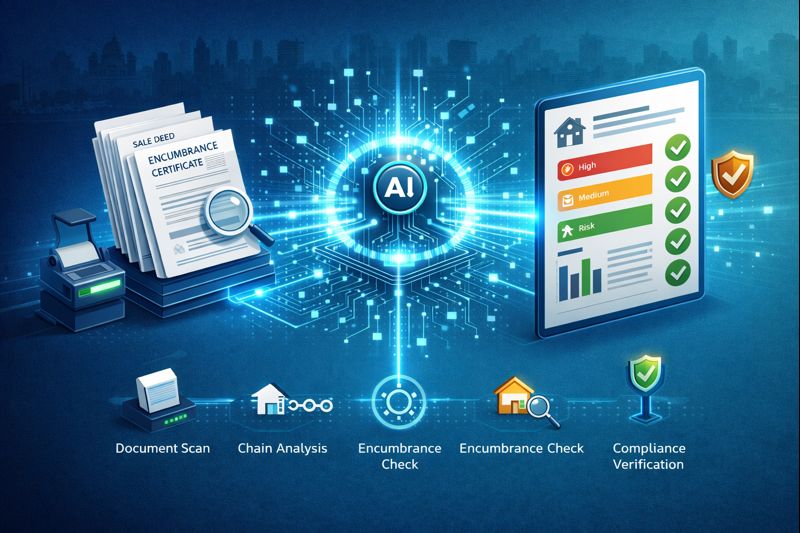
AI title verification uses artificial intelligence to analyze property documents, trace ownership history, and identify potential legal risks. Instead of a lawyer manually reading through stacks of papers, AI systems can:

  • Extract text from scanned documents using Optical Character Recognition (OCR)
  • Understand legal terminology through Natural Language Processing (NLP)
  • Identify patterns and anomalies that might indicate fraud or errors
  • Cross-reference information across multiple documents automatically
  • Generate structured reports highlighting risks and findings

The key difference from traditional verification isn't that AI replaces lawyers—the best platforms combine AI speed with human legal expertise for validation.

Why AI Title Verification Matters in India

India's property verification challenges make AI particularly valuable:

Complex Land Records

Each state maintains its own record system with different formats, terminology, and processes. Karnataka uses KAVERI and Bhoomi; Maharashtra has IGR; Tamil Nadu has TNREGINET. Navigating these requires specialized knowledge.

Document Diversity

Property documents in India range from 100-year-old handwritten deeds to modern digital registrations. Many are in regional languages—Kannada, Hindi, Marathi, Tamil, Telugu. Processing this variety manually is time-consuming and error-prone.

High Fraud Risk

Property fraud remains a significant problem. Forged documents, impersonation, disputed inheritances, and undisclosed encumbrances trap unsuspecting buyers. AI can detect patterns that humans might miss when reviewing documents individually.

Market Speed

In competitive real estate markets like Bangalore, good properties sell fast. Waiting 2-3 weeks for traditional due diligence often means losing the deal. AI enables verification in hours, not weeks.

How AI Title Verification Works: Step-by-Step

Step 1: Document Upload and Ingestion

You upload property documents to the platform—typically sale deeds, mother deeds, encumbrance certificates, khata documents, and building approvals. The system accepts:

  • Scanned PDFs and images (JPEG, PNG)
  • Documents in multiple languages
  • Both typed and handwritten content

Advanced OCR technology converts these into machine-readable text, even handling the challenges of old handwritten documents in regional scripts.

Step 2: Data Extraction

AI extracts key information from each document:

  • Property details: Survey number, plot dimensions, boundaries, address
  • Owner information: Names, relationships, identification details
  • Transaction data: Dates, consideration amounts, registration numbers
  • Legal markers: Conditions, restrictions, special clauses

Each extraction includes a confidence score indicating how certain the AI is about the accuracy.

Step 3: Chain of Title Analysis

The AI traces ownership history by:

  • Linking documents chronologically from original allotment to current owner
  • Identifying gaps where transfers may be missing
  • Flagging suspicious patterns (rapid resales, unclear inheritance)
  • Checking that each transfer was properly authorized

A complete chain of title is essential—breaks in the chain can invalidate your purchase.

Step 4: Encumbrance Detection

The system analyzes encumbrance certificates and other records to identify:

  • Active mortgages and loans against the property
  • Court attachments and legal holds
  • Liens, charges, and caveats
  • Pending litigation involving the property
  • Unpaid property taxes

Step 5: Compliance Verification

For applicable properties, AI checks regulatory compliance:

  • RERA status: Is the project registered? Is registration valid?
  • Building approvals: Are plans sanctioned by the competent authority?
  • OC/CC certificates: Does the building have occupancy approval?
  • Land use: Is the property zoned for its intended use?

Step 6: Risk Scoring and Report Generation

The AI generates a comprehensive report with:

  • Risk scores across categories (title, legal, financial, regulatory)
  • Specific findings with supporting evidence
  • Recommendations for addressing identified issues

In hybrid platforms, a lawyer reviews the AI output before the final report is delivered, adding legal validation and catching edge cases AI might miss.

Comparing Title Verification Methods

Here's how different approaches compare:

Feature Traditional Lawyer DIY Online Portals AI + Lawyer Hybrid
Speed 5-15 days Instant (limited data) 2-24 hours
Accuracy High (varies by lawyer) Low-Medium High
Cost ₹15,000-50,000 Free-₹500 ₹5,000-15,000
Document Analysis Manual review Basic keyword search Deep AI analysis
Chain of Title Partial (time-limited) Not available Complete (30+ years)
Lawyer Validation Yes No Yes
Risk Scoring Subjective opinion No Objective + validated
Bank Acceptance Yes No Yes (most platforms)

Traditional Lawyer Verification

Pros: Deep expertise, handles complex cases, legal liability

Cons: Slow, expensive, quality varies significantly, limited bandwidth

DIY Online Portals (KAVERI, Bhoomi, etc.)

Pros: Free or very cheap, instant access to some records

Cons: No analysis—just raw data. You need expertise to interpret. Many records not digitized. No chain of title. No legal validity.

AI + Lawyer Hybrid Platforms

Pros: Fast, comprehensive, standardized quality, affordable, legally validated

Cons: Depends on document quality, regional coverage varies

What to Look for in an AI Title Verification Platform

Essential Features

  • Regional language support: Can it process Kannada, Tamil, Hindi documents accurately?
  • OCR quality: How well does it handle handwritten and old documents?
  • Chain of title: Does it trace ownership history or just analyze individual documents?
  • Encumbrance analysis: Does it parse ECs and identify active liens?
  • Compliance checks: RERA, building approvals, OC/CC verification

Validation Layer

  • Lawyer review: Is AI output reviewed by qualified property lawyers?
  • Certified reports: Are reports legally valid and accepted by banks?
  • Clear risk categories: High/Medium/Low ratings with explanations

User Experience

  • Turnaround time: Clear commitments on delivery speed
  • Transparent pricing: No hidden charges
  • Support availability: Can you talk to someone if you have questions?

Security

  • Document encryption: How are your sensitive documents protected?
  • Data privacy: What happens to your documents after verification?
  • Compliance: Does the platform follow data protection standards?

Legal Byte's Approach to AI Title Verification

Legal Byte combines AI technology with experienced Karnataka property lawyers to deliver comprehensive title verification:

Karnataka Specialization

Our AI models are trained specifically on Karnataka property documents, including Kannada-language deeds and local record formats. We understand KAVERI, Bhoomi, BBMP, and BDA systems deeply.

The 4-Step Process

  1. Upload: Submit your property documents through our secure platform
  2. AI Analysis: Our system extracts data, traces ownership, and identifies risks
  3. Lawyer Validation: Experienced property lawyers review AI findings
  4. Report Delivery: Receive a comprehensive, legally-validated report

Hybrid Model Benefits

You get AI's speed and thoroughness combined with human legal judgment. Complex issues get proper attention. The final report carries legal weight and is accepted by banks for loan processing.

Limitations of AI Title Verification

AI title verification has important limitations to understand:

  • No physical inspection: AI cannot visit the site to check for encroachments, construction quality, or actual possession
  • Document quality dependency: Poor scans or missing documents limit what AI can verify
  • Government data accuracy: AI relies on digitized records—if government databases have errors, AI will too
  • Complex disputes: Family property disputes, litigation history, and negotiation strategy need human legal counsel

For these reasons, AI verification should be part of your due diligence—not the entirety of it. Physical site visits and legal consultation remain important for high-value transactions.

When to Use AI Title Verification

AI title verification is particularly valuable when:

  • Before making an offer: Verify the property quickly to negotiate from strength
  • During loan application: Banks often require due diligence reports—AI speeds this up
  • For inherited property: Trace complex family ownership histories efficiently
  • Commercial transactions: Verify multiple properties or large portfolios quickly
  • Investment decisions: Quick verification helps you move fast on opportunities

AI title verification represents a significant advancement in how property transactions are secured in India. By combining the speed and consistency of artificial intelligence with the expertise and judgment of qualified property lawyers, the hybrid approach delivers verification that is both fast and reliable.

Key points to remember:

  • AI can process documents in hours that would take lawyers weeks to review manually
  • The best platforms combine AI analysis with human lawyer validation
  • Look for regional expertise, language support, and bank-accepted reports
  • AI verification should complement—not replace—physical site inspection
  • Cost-effective verification is now accessible to individual home buyers, not just institutions

Whether you're buying your first home in Bangalore, processing loans for a bank, or acquiring land for development, AI-powered title verification helps you make informed decisions faster and with greater confidence.

Ready to verify your property title? Legal Byte specializes in Karnataka property verification, combining AI technology with experienced local lawyers. Start your title verification today.

About the Author

Rajat R Achar
Rajat R Achar

Real estate specialist with 20 years of corporate experience spanning product management and sales. Passionate about AI, automation, and leveraging technology to simplify complex processes.

Frequently Asked Questions

What is AI title verification in India?
AI title verification is the use of artificial intelligence technologies to analyze property documents, trace ownership history, and identify legal risks in real estate transactions. It combines OCR (Optical Character Recognition) to read scanned and handwritten documents, Natural Language Processing to extract key information like survey numbers and owner names, and pattern recognition to detect anomalies. Unlike traditional manual verification by lawyers alone, AI title verification processes documents faster while still incorporating lawyer validation for accuracy and legal validity.
How accurate is AI property title verification?
AI property title verification achieves high accuracy when combined with quality document scans and lawyer review. The hybrid AI + lawyer model delivers the best results: AI handles rapid document analysis, data extraction, and pattern matching, while experienced property lawyers validate findings and interpret complex situations. Accuracy depends on document quality, with clear scans producing better results than faded or handwritten documents. The combination of AI consistency and human judgment typically outperforms either approach alone.
How long does AI title verification take?
AI title verification typically takes 2-24 hours compared to 5-15 days for traditional lawyer-only verification. The speed advantage comes from automated document processing, instant data extraction, and simultaneous analysis of multiple documents. The exact timeline depends on the number of documents, complexity of the ownership chain, and whether the report includes lawyer validation. Even with full lawyer review, the hybrid approach is significantly faster than manual methods.
Is AI title verification legally valid in India?
AI title verification reports are legally valid when they include lawyer review and certification. The AI component handles document analysis and risk identification, while qualified property lawyers validate the findings and provide their professional opinion. Reports from platforms that combine AI analysis with lawyer certification are accepted by banks for home loans and can be used as supporting documentation in property transactions. The key is choosing a platform that offers lawyer-validated reports rather than purely automated output.
What documents are needed for AI title verification?
Common documents needed for AI title verification include: sale deeds and registration documents, mother deed and chain of ownership documents, encumbrance certificates (EC), khata certificates and property tax receipts, approved building plans, RERA certificates (for apartments), and NOCs and approval letters. Most platforms accept PDF and scanned image formats. For best results, provide clear scans of all available documents covering at least 30 years of ownership history.